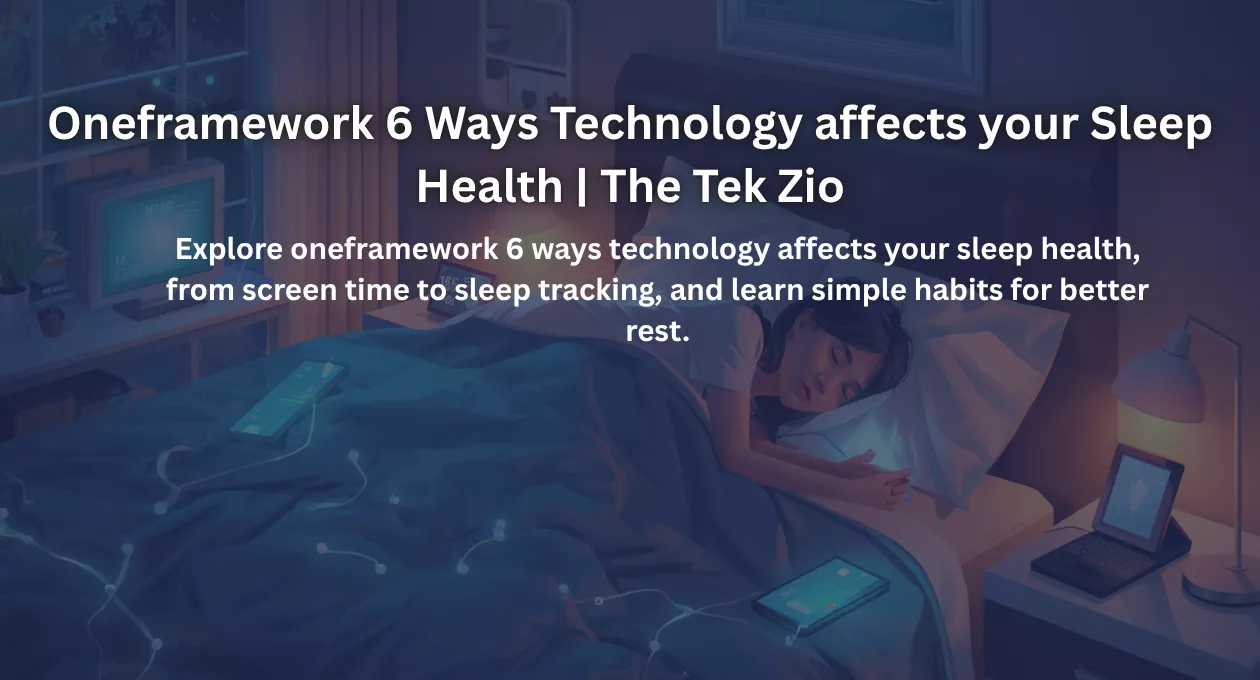
Technology sits beside your pillow more often than a book now. Your phone wakes you, your laptop follows you after work, your TV streams one more episode, and your smartwatch judges your morning score. That’s why oneframework 6 ways technology affects your sleep health matters for modern life in the USA. It explains how technology affects sleep health through light, alerts, emotions, habits, and late-night use. Good sleep supports mood, focus, memory, and physical health. The CDC says enough sleep and good sleep quality are both essential for healthy sleep, while insufficient sleep remains a major public health concern in the United States.
However, this is not a “technology is bad” article. Devices help you work, learn, relax, connect, track fitness, and manage busy days. The real issue starts when bedtime technology use enters the last hour before sleep and pushes the brain into alert mode. Oneframework 6 ways technology affects your sleep health gives you a simple way to understand the effects of technology on sleep without panic. When you know the pattern, you can fix the pattern. Better choices around digital devices and sleep can protect your sleep duration, support your natural sleep cycle, and build healthy sleep habits that fit real life.
“Your phone does not need to disappear from your life. It only needs a bedtime.”
What Is OneFramework 6 Ways Technology Affects Your Sleep Health?
Oneframework 6 ways technology affects your sleep health is a simple way to explain how modern screens and devices change your night. It focuses on six common problems: blue light, delayed body clock timing, mental stimulation, notifications, shorter sleep, and risky nighttime habits. These problems often work together. For example, technology before bed can expose your eyes to blue light exposure, pull your attention into social media, delay your bedtime routine, and reduce your total rest.
This framework also helps you see both sides of technology and sleep health. Some technology hurts rest when it creates sleep disruption, stress, or late-night temptation. Other technology can help when it reminds you to slow down, tracks your sleep pattern, plays calm audio, or blocks alerts. The goal is not digital guilt. The goal is smart control. When you understand how technology affects sleep, you can stop letting small habits quietly damage your restful sleep.
How Technology Changes Your Sleep Cycle
Your body runs on a daily rhythm called the circadian rhythm. This rhythm helps decide when you feel awake and when you feel sleepy. Light, meals, stress, movement, and routine all shape it. Bright screens late at night can confuse that timing. This is where screen time and sleep health become closely linked. When your eyes receive screen light before bed, your brain may act as if the day has not ended yet. Research also connects screen media use with delayed bedtime and shorter sleep, especially among younger people.
This matters because your sleep cycle is not one flat block. Your brain moves through light sleep, deep sleep, and REM sleep several times during the night. Late-night screens can delay sleep onset, shrink total sleep duration, and disturb the normal wake-up cycle. Even when you stay in bed for eight hours, poor timing can still leave you tired. That is why oneframework 6 ways technology affects your sleep health should start with your body clock. Your devices may look harmless, but timing changes everything.
Blue Light and Melatonin: Why Screens Keep You Awake
Blue light and sleep have a strong connection because blue light can affect alertness and the body’s sleep signals. Phones, tablets, laptops, TVs, LED bulbs, and gaming screens all produce light that can influence the brain. Evening blue light exposure can contribute to melatonin suppression, especially when it happens close to bedtime. Melatonin is a hormone that helps your body understand that darkness has arrived. Sleep Foundation explains that blue light can influence alertness, hormone production, and sleep cycles.
The phrase blue light melatonin sounds technical, but the idea is easy. Your brain reads light as a time signal. When you use a phone screen and sleep right after, the signal becomes mixed. A laptop screen before sleep can do the same thing, especially during long work or study sessions. Night screen exposure may also contribute to circadian rhythm disruption, which means your body clock shifts later. Blue light is not evil during the day. At night, though, it can become a thief with a bright face.
| Device habit | Possible sleep effect | Better choice |
| Bright phone use in bed | More alertness and delayed sleep | Dim screen and stop earlier |
| Laptop work late at night | Stress plus light exposure | Finish hard tasks earlier |
| TV in a dark room | Long viewing and late bedtime | Set a clear stop time |
| Gaming before sleep | High excitement and delayed calm | Switch to quiet activity |
| Smartwatch alerts overnight | Broken rest and light sleep | Use sleep mode |
Late-Night Scrolling and Mental Stimulation
Light is only part of the story. Your brain also reacts to content. Social media before bed, breaking news, comments, online shopping, sports debates, and short videos all feed the mind. This creates mental stimulation when your brain needs quiet. The effects of technology on sleep become stronger when content triggers worry, comparison, anger, excitement, or curiosity. A calm screen may not feel as harmful as a dramatic feed, but both can keep your attention hooked.
Late-night scrolling also turns time into soup. Ten minutes becomes forty minutes. One video becomes twelve. Watching videos at night and streaming before sleep can create a soft trap because autoplay removes natural stopping points. Smartphone use at night adds another layer because the phone is personal, portable, and always ready. This is how poor sleep quality and technology often meet. Your body may be tired, but your mind keeps chasing one more post, one more message, and one more little spark.
Notifications, Sounds, and Sleep Interruptions
Notifications can disturb sleep even when you are not actively using your device. A buzz, flash, ringtone, app alert, email ping, or smartwatch vibration can pull the brain out of rest. Sometimes you wake fully. Sometimes you only shift into lighter sleep. Either way, these small interruptions can reduce sleep quality and make the night feel less restorative. Oneframework 6 ways technology affects your sleep health includes alerts because sleep is fragile. It needs darkness, quiet, and safety.
The bigger problem is anticipation. When your phone sits beside you, your brain may stay half-ready for a message. That is especially true when work, family, dating, school, or money stress connects to your device. Mobile phone before bed use can train your brain to expect activity in bed instead of rest. Over time, the bedroom stops feeling like a sleep zone and starts feeling like a mini command center. This is not dramatic. It is common. Still, it can create real sleep problems from technology.
How Technology Reduces Sleep Duration
Many people lose sleep not because they cannot sleep, but because they do not start sleeping. This is called bedtime delay. You plan to sleep at 10:30, then check one app, answer one text, watch one video, and suddenly it is midnight. This is one of the clearest ways technology affects sleep health. The CDC notes that adults need at least seven hours of sleep on average, and insufficient sleep is linked with several health risks.
Digital platforms also remove stopping cues. Infinite scroll, autoplay, personalized feeds, reward streaks, and next-episode buttons keep you engaged. Gaming and sleep problems often follow the same pattern because games reward progress and attention. Tablet use before sleep, computer use before bedtime, and TV before bed effects can all reduce sleep duration when they push bedtime later. The device may say “relax,” but the clock says otherwise. That lost hour matters when morning alarms do not move.
Technology and Sleep Health in Teens, Students, and Professionals
Teens face a special version of this problem because social life often lives inside the phone. Group chats, games, videos, school apps, and social platforms can follow them into bed. The American Academy of Pediatrics now focuses on healthy digital boundaries, family conversation, and context rather than only simple time limits. For teens, screen time and sleep health connects with mood, homework, friendships, and school performance. A phone under the pillow can feel comforting, but it can quietly break the sleep routine.

Students and professionals face a different trap. Students may study late through screens, while workers may check Slack, Teams, email, calendars, or client messages after hours. Remote work makes this worse because the office can live inside a laptop. Bedtime technology use then carries stress into the night. For USA readers, this is highly practical. A college student finishing online assignments, a nurse checking schedules, or a freelancer answering clients may all face the same problem: the brain cannot downshift when work keeps glowing.
Can Sleep Trackers and Smartwatches Improve Sleep Health?
Technology can also help when it supports awareness instead of anxiety. Sleep trackers, smartwatches, sunrise alarms, white-noise apps, breathing apps, and bedtime reminders can support better sleep hygiene. A tracker may show that late caffeine, evening alcohol, heavy meals, or long screen sessions harm your sleep pattern. This can help you make better choices. However, consumer trackers estimate sleep. They do not replace medical testing, a doctor, or a sleep specialist.
The risk starts when sleep data becomes another source of pressure. Some people chase a perfect sleep score and feel stressed before bed. That can backfire. Use sleep tracking like a weather report, not a school grade. The data should guide your healthy sleep habits, not judge your worth. In the context of oneframework 6 ways technology affects your sleep health, smartwatches work best when they create calm patterns. They work poorly when they add worry, alerts, and obsession.
Healthy Technology Habits for Better Sleep
A healthy digital night does not require a perfect lifestyle. It requires small, repeatable choices. Mayo Clinic recommends keeping a regular sleep schedule, creating a restful environment, limiting naps, including physical activity, and managing worries for better sleep. For technology, the most useful habit is a digital wind-down window. Stop heavy work, gaming, scrolling, and bright-screen entertainment before bed. If one hour feels hard, start with twenty minutes. A small win beats a perfect plan you never follow.
You can also change the bedroom setup. Charge your phone away from your bed. Turn on Do Not Disturb. Lower brightness. Use night mode. Keep urgent contacts allowed, but silence shopping apps, sports alerts, newsletters, and social platforms. Replace streaming before sleep with calm audio, a paper book, stretching, prayer, journaling, or quiet planning for tomorrow. This builds a stronger bedtime routine. Over time, your brain learns that bed means rest, not reaction.
| Sleep goal | Tech habit to reduce | Healthier replacement |
| Fall asleep faster | Smartphone use at night | Phone away from bed |
| Protect melatonin | Screen light before bed | Dim lights earlier |
| Reduce stress | Work email at night | Tomorrow list on paper |
| Improve focus | Social media before bed | Calm reading |
| Sleep longer | Autoplay videos | Fixed screen cutoff |
| Wake fresher | Overnight alerts | Do Not Disturb mode |
FAQs About Oneframework 6 Ways Technology Affects Your Sleep Health
How does technology affect sleep health?
Oneframework 6 ways technology affects your sleep health shows that screens and devices affect sleep through light, alerts, stress, entertainment, and delayed bedtime. These habits can cause sleep disruption, reduce deep sleep, and make your wake-up cycle harder. The problem usually grows slowly. One late night becomes a pattern, then the pattern becomes normal.
Does blue light from phones really affect sleep?
Yes, blue light and sleep are connected because evening light can affect alertness and melatonin timing. The impact depends on brightness, timing, distance, and duration. Blue light melatonin concerns are strongest when you use a bright screen close to bedtime. That is why phone screen and sleep habits matter more at night than during the day.
Is watching TV before bed bad for sleep?
TV before bed effects depend on what you watch, how long you watch, and how late it gets. A calm show may feel relaxing, but autoplay and bright light can still delay sleep. Dramatic news, sports, crime shows, and binge-worthy series can keep the brain alert. This can reduce restful sleep even when the couch feels comfortable.
Can gaming before bed cause sleep problems?
Yes, gaming and sleep problems often happen because games demand fast thinking, emotional reactions, competition, and reward chasing. A game can keep your brain alert after the screen shuts off. If gaming is part of your night, set a fixed stop time and leave a calm buffer before bed. Your sleep cycle needs time to slow down.
Are sleep trackers good or bad?
Sleep trackers can help when they show useful trends. They can support healthy sleep habits by revealing patterns in bedtime, wake time, and rest quality. However, they can hurt if you obsess over every score. Use trackers as a guide, not a verdict. When sleep problems continue, speak with a healthcare provider instead of relying only on device data.
Final Thoughts: Using Technology Without Damaging Sleep Health
Oneframework 6 ways technology affects your sleep health gives you a clear map for a very modern problem. Technology affects your rest through light, body clock timing, mental stimulation, alerts, shorter nights, and unhealthy bedtime habits. These factors can weaken sleep quality, cut sleep duration, and disturb the natural sleep cycle. Still, you do not need to reject technology. You need to place it in the right part of your day.
The best approach is balanced and realistic. Use your phone for work, learning, family, health, and entertainment, but protect the final stretch before sleep. Your future morning depends on your final evening choices. Oneframework 6 ways technology affects your sleep health works because it makes the invisible visible. Once you notice how digital devices and sleep interact, you can fix the small leaks. Better rest often starts with one quiet decision: let the night be night.
For more amazing blogs keep visiting The Tek Zio


